
Here’s a truth I tell every couple I work with: your wedding day will be one of the fastest days of your life. Blink and it’s cake-cutting. The only thing standing between you and a day that feels rushed, chaotic, and stressful is one unglamorous document — the wedding day timeline. Get it right and the whole day just flows. Get it wrong and you’re taking photos during your own cocktail hour while your guests wonder where you are. So let me show you how to make a wedding day timeline that actually holds.
I’ve built hundreds of these, so let me walk you through how a wedding day timeline actually comes together — the real logic behind it, not just a list of times. (And if you want the fillable version to build your own as you read, grab my free Wedding Day Timeline Blueprint — it’s the exact framework I’m about to walk you through.)
Rule #1: Set Your Ceremony Time First
This is the single most important move, and it’s the one couples skip. Set your ceremony start time first — everything else on the day works backward or forward from it. Your getting-ready schedule counts backward from “I do.” Your cocktail hour, dinner, and dancing count forward from it. The ceremony is the anchor of the entire day.
So before you plan a single other thing, lock that time. And a DMV-specific tip: think about your light. If you want those golden-hour photos, your ceremony time needs to account for sunset — which shifts a lot between a June wedding and a November one. Your photographer will thank you.
How to Make a Wedding Day Timeline: Start With the Snapshot
Before the hour-by-hour, get your basics in one place: couple’s names, date, guest count, ceremony and reception locations (and addresses — your vendors need them), and your three anchor times — ceremony start, cocktail hour, reception start. This is your day at a glance, and everything else builds off it.
Build Your Vendor Directory — With Arrival Times
Every vendor, every contact, every arrival time in one place. Coordinator, photographer, videographer, caterer, florist, DJ or band, officiant, hair, makeup, cake, rentals. This isn’t busywork — on the day, when something needs answering, nobody’s digging through their inbox for a phone number.
And here’s a pro move most people miss: stagger your vendor arrivals. Everyone showing up at once creates a traffic jam at the loading door and a setup free-for-all. Your team and rentals come first (they build the space), then the folks who dress it — florist, then the vendors who need a set stage like your DJ and photo booth. A staggered arrival keeps setup calm and on schedule instead of a chaotic pile-up.
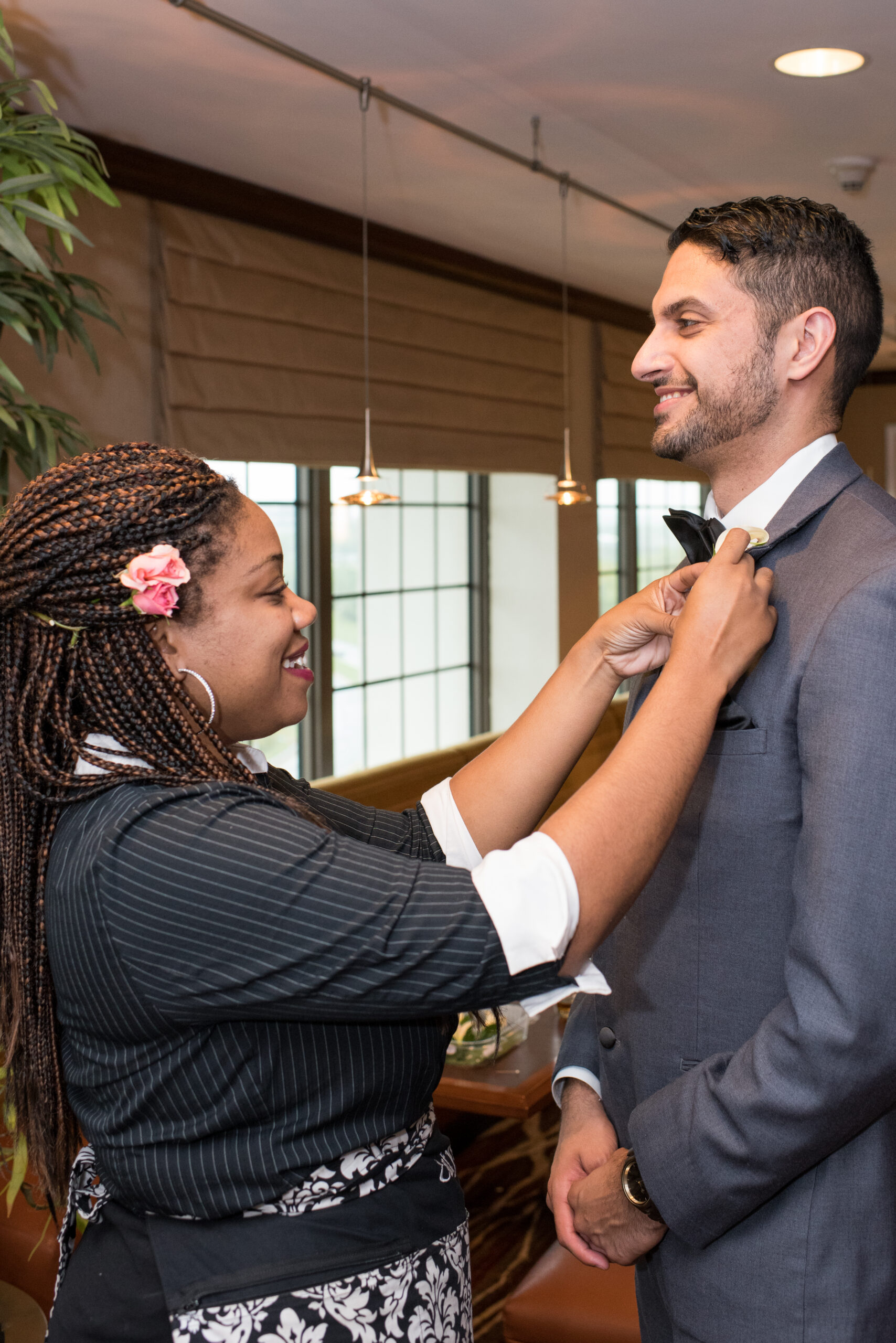
Getting Ready: Where Timelines Quietly Fall Apart
If your wedding runs late, I can almost promise you it started in the getting-ready room. Hair and makeup always takes longer than people think, and it’s the domino that knocks over the whole rest of the day.
Here’s the math I use so it doesn’t: take each artist’s per-person time, multiply by how many people they’re servicing, and schedule the bride LAST. You want to be finishing right as photography coverage begins, looking fresh — not done two hours early, or worse, still in the chair when the photographer’s ready. Build in buffer. Then build in a little more. Nobody has ever complained about being ready early on their wedding day.
Your getting-ready block runs roughly: bridal party arrives, hair and makeup start, photography coverage begins, wedding party dressed — and the bride gets into her dress last, for that big reveal moment.
Before the Ceremony
The quiet, high-stakes stretch. Decide if you’re doing a first look (it opens up your photo timeline enormously — you can knock out couple’s and wedding-party photos before the ceremony, freeing your cocktail hour). Then: earliest guest arrival, prelude music begins, and the wedding party lines up. Pad this section — late guests and last-minute nerves live here.
The Ceremony
Shorter than you’d guess (most run 20–30 minutes), but plan the order — your processional lineup and your order of service — so nobody’s whispering “wait, do I go now?” at the back of the aisle. Note your start and end time, because your cocktail hour depends on it.
Cocktail Hour: Your Photo Window
While guests sip and snack, this is when family, wedding party, and newlywed photos happen — if you didn’t do a first look. This is exactly why the first-look decision matters so much: no first look means this hour is packed with photos; first look means you actually get to enjoy it. Either way, plan it deliberately.
Reception: Give It a Flow
The reception has its own mini-timeline, and pacing is everything: grand entrance, welcome and blessing, first dance, dinner, toasts, parent dances, cake cutting, bouquet toss, open dance floor, last dance and send-off. The art is in the spacing — you don’t want all the “programming” front-loaded so the back half drags, and you don’t want dinner running so long the dance floor never heats up. Alternate the structured moments with open party time so the energy keeps building.
Don’t Forget the Breakdown
The unsexy finale nobody plans until they’re exhausted at midnight trying to figure out who’s grabbing the rentals. Note when breakdown begins and when everything has to be cleared — venues have hard out-times, and going over can cost you. Assign who’s responsible for what before the day, so you’re not doing it in your wedding dress.
Let Someone Else Run It
Here’s the thing: building a beautiful timeline is one job. Running it on the day — keeping eleven vendors, a wedding party, and a hundred guests on schedule while staying invisible — is a completely different one. And you, the couple, absolutely cannot be the ones doing it. You’re supposed to be in your wedding, not managing it. (If you’re still early in planning, start with what to do first after getting engaged — the timeline gets much easier once the big pieces are set.)
That’s my whole job. I build the timeline, then I run it so flawlessly you never think about it once. You just live your day.
Want to start building yours? Grab my free Wedding Day Timeline Blueprint to map it out — and when you’re ready for someone to actually run the show, book a discovery call and let’s talk about your day.
Live Intentionally. Celebrate Loudly.