Couples tell me things like “we want it moody and romantic” or “elevated but relaxed” or “warm, like a really good dinner party.” And I love those descriptions — but here’s the gap most people don’t see: those are feelings, not plans. The actual work — the wedding design process — is the translation. It’s taking that feeling and turning it into a real, cohesive room your guests walk into and immediately feel.
They call me The Event Architect for a reason — design is a build, and there’s a process behind it. So let me pull back the curtain and show you how a wedding designer actually works, because once you see it, you’ll understand why “just picking pretty things” and designing a wedding are two completely different sports.
Step One: Translate the Feeling Into a Visual Language
Everything starts with the feeling — but my first real job is turning that feeling into concrete visual decisions. “Moody and romantic” isn’t a color; it’s a direction. So I translate it: moody means deep, saturated tones over pastels. Romantic means soft, diffused light over bright. It means candlelight, rich textures, maybe velvet and dark florals and lots of low, warm glow.
This is where a designer’s eye earns its keep. I’m converting an abstract vibe into an actual palette, specific textures, materials, and a lighting approach — the building blocks. A couple might land on “moody romantic” and picture two totally different weddings; my job is to define it precisely enough that every decision after this points the same direction. (This is also where the mood board does its best work.)
Step Two: Build the Palette and the Details Around It
Once the visual language is set, I build out the specifics — and the discipline here is restraint. A cohesive design isn’t the most elements; it’s the right elements, all speaking to each other.
That means a considered color palette (not just “our colors” but how they layer — the dominant tone, the accents, the metals), the textures that carry the feeling (linens, glassware, candle types, floral choices), and the small repeated details that tie a room together. The magic of good design is consistency: when the invitation, the ceremony, the tablescape, and the signage all clearly belong to the same world, the whole day feels intentional and expensive — even when it isn’t. When they don’t, it reads as a collection of nice things that don’t quite match, and guests feel that even if they can’t name why.
Step Three: Apply It to the Real Space
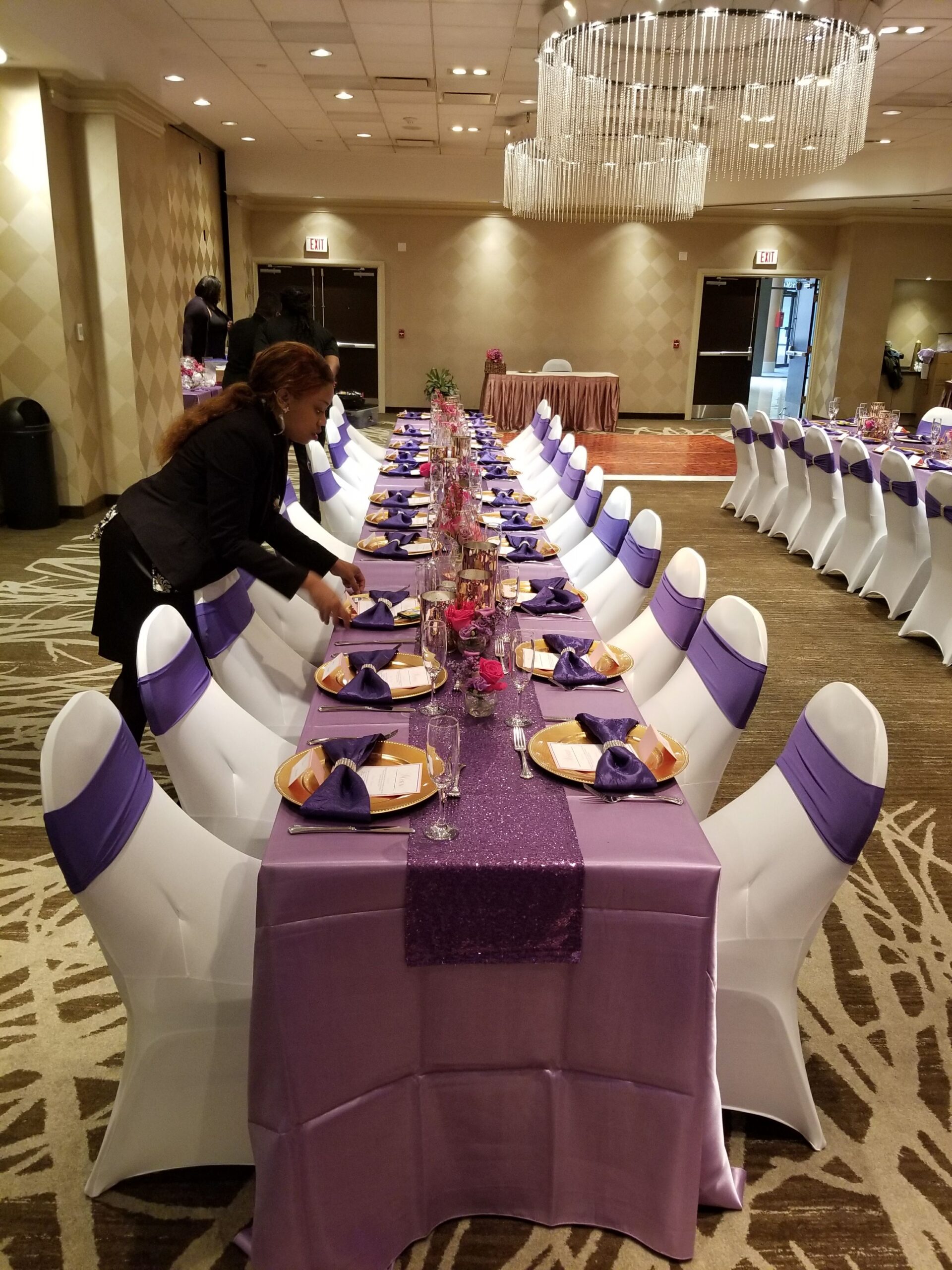
Here’s where design meets reality — and where a lot of pretty Pinterest visions fall apart. A design has to actually work in your actual venue, at your actual scale, for your actual guest count. This is the part I think about hardest.
How does the room flow? Where does the eye land when guests walk in? How do you use lighting to transform a blank space (or downplay an ugly carpet)? How do the tables sit in the room, and does the layout serve the vibe and the logistics? A ballroom and a barn and a garden each need a completely different approach to land the same feeling. Designing on paper is easy; designing for the real four walls you’ve got is the craft.
Step Four: Design the Whole Journey, Not Just the Reception
This is the piece that separates a designed wedding from a decorated one. I’m not designing a room — I’m designing an experience, moment by moment, from the second a guest arrives to the second they leave.
The arrival and first impression. The ceremony space. The transition to cocktail hour. The reveal of the reception. The send-off. Each is a beat in a story, and each should feel like part of the same world while giving guests something new to take in. When the whole journey is designed — not just the “big” spaces — the day has a rhythm and a cohesion people remember long after they’ve forgotten what the centerpieces looked like.
Why the Wedding Design Process Matters
Here’s the honest truth about why I’m walking you through all this: design is a skill, not a shopping trip. Anyone can pin pretty pictures. Translating a feeling into a precise visual language, building it with restraint, making it work in a real space, and carrying it through the entire guest journey — that’s the work, and it’s genuinely hard to do well on your own while you’re also living your life and planning everything else.
That’s exactly what I do. Whether you want full design execution or just help building the visual foundation, my Design Lab meets you where you are — from a mood board and palette to a fully styled, executed day. You bring the feeling. I’ll build the world around it.
Ready to turn your vision into a day that’s unmistakably yours? I’d love to hear what you’re dreaming up. Book a discovery call and let’s talk about your design.
Live Intentionally. Celebrate Loudly.